Most of a window’s surface is glass, so for warmth, cooling, noise and safety the glass often matters more than the frame. Yet glass choice is often settled with “make it double glazed”. With İzmir’s hot summers, coastal humidity and noisy streets, the right glass directly affects comfort and energy cost. This guide explains how insulated glass works, which glass makes sense on which façade and what to ask in a quote.
Short answer: Glass choice rests on three questions: (1) keep heat in or limit the sun? (low-E type and orientation), (2) is there noise? (different thicknesses, laminated glass) and (3) is there impact or safety risk? (toughened or laminated). Ask for the glass build-up, gas fill and spacer in writing.
How insulated glass works
An insulated glazing unit joins two or more panes around a sealed gap. A build-up written as 4-16-4 means “4 mm pane, 16 mm gap, 4 mm pane”.
- Panes: thickness and type (float, toughened, laminated, coated) define the unit.
- Gap: filled with air or gas; its width affects insulation.
- Spacer: keeps the panes apart and absorbs moisture; it affects heat loss at the edge.
- Edge seal: protects the unit from moisture; if it fails the unit fogs inside.
Low-E (low-emissivity) glass
Low-E glass has a very thin, transparent coating that:
- helps reduce room heat escaping through the glass (keeping warmth in winter);
- in some types limits heat gain from the sun (cooler in summer).
The coating type, the surface it sits on and the façade orientation should be chosen together; one glass is not best for every façade.
Gas fill
Noble gases such as argon conduct less heat than air and can improve insulation somewhat. The benefit depends on gap width and coating, and on fill rate and sealing. Ask for the gas and gap size in the quote.
Glass by façade
| Situation | Watch out for | Suitable solution |
|---|---|---|
| South and west façades in the sun | Summer heat | Solar-control or suitable low-E glass |
| North façades with little sun | Keeping heat in winter | High-insulation low-E glass |
| Façades facing a road or noisy street | Noise | Different thicknesses, laminated glass, good sealing |
| Large panes near the floor or door | Impact and safety | Toughened or laminated glass |
| Balcony, terrace and balustrade glass | Falls and impact | Toughened laminated; application-specific calculation |
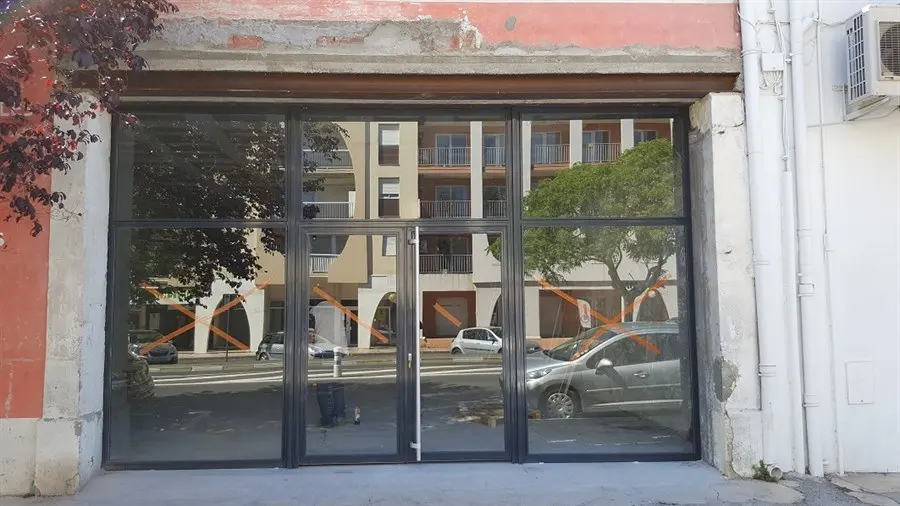
| Shopfronts | Security and look | Laminated or toughened, to size |
Solar control for İzmir summers
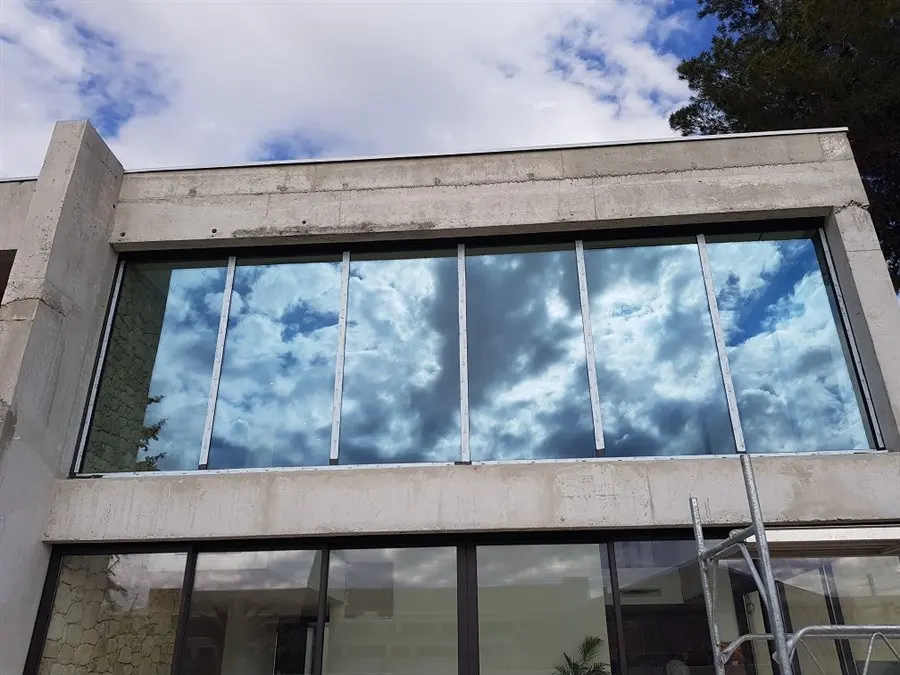
On sun-facing façades İzmir interiors heat quickly in summer. Solar-control or low-E glass can help limit heat entering. External shutters, blinds, overhangs and canopies also reduce heating. Glass is only one part; consider the whole façade.
Sound insulation: glass alone is not enough
For noise:
- Different pane thicknesses can reduce the transmission of certain frequencies.
- Laminated glass damps vibration with its interlayer.
- Sealing is critical; without good gaskets and fitting, even the best glass underperforms.
On a busy façade choose glass, profile and installation together.
Safety glass: toughened and laminated
- Toughened glass: heat-treated for strength; when broken it falls into small, blunt pieces.
- Laminated glass: two panes with an interlayer; when broken the pieces stay bonded and resistance to penetration rises.
- Where: large panes at floor level, beside doors, bathrooms, balustrades and shopfronts. The exact requirement depends on application and regulation; check in writing for your project.
Glass balustrades have their own rules; see our glass balustrade guide.
Condensation and fogging are different
- Condensation on the surface: humid room air turns to droplets on cold glass; better insulation and ventilation reduce it.
- Fogging inside the unit: moisture has entered the gap; the edge seal has failed and the unit must be replaced.
Frame and glass together
The best glass cannot perform in a poorly insulating frame. For thermally broken aluminium or multi-chamber PVC see our aluminium vs PVC guide and PVC windows guide. Our aluminium joinery and PVC windows pages show the ranges.
Common mistakes
- Stopping at “double glazing”: not asking build-up, coating and gas.
- Same glass on every façade: south and north needs differ.
- Plain glass where safety glass is needed.
- Focusing on glass and neglecting installation.
- No written technical specification.
7 questions to ask in a quote
- What is the glass build-up (for example 4-16-4, coating, thickness)?
- Is there a low-E or solar-control coating, on which surface?
- Which gas fills the gap and what is the spacer?
- Which panes are toughened or laminated?
- If sound insulation is needed, what is proposed?
- What is the unit warranty and does it cover fogging?
- Are glass and frame installed together and how is handover done?
Ertürk Metal in İzmir and across Türkiye
Since 2007, Ertürk Metal has built aluminium and PVC joinery, steel-framed glazing, partitions, railings, doors and metal structures in its Buca, İzmir workshop, working from measurement to installation under one roof. Our own team handles measuring, shipping and installation across Türkiye. We also ship to France and install within about 200 km of Béziers. See our service areas.
Share the façade orientation, the use and any noise source through our contact page, WhatsApp or phone, and we will choose the right glass solution together.
Conclusion
The right glass follows façade orientation, noise and safety needs. Asking for build-up, coating, gas and warranty in writing, and judging glass and frame together, is the easiest way to improve comfort and energy cost.
Related reading: PVC Windows Guide for İzmir · Aluminium or PVC Windows in İzmir · Glass Balustrade Guide for İzmir
Frequently asked questions
What is insulated glass and how does it differ from single glazing?
An insulated glazing unit has two or more panes joined with a sealed air or gas gap between them. The gap slows heat transfer, so it insulates better and reduces condensation compared with single glass.
What does low-E glass do?
Low-emissivity glass carries a very thin metal-oxide coating. It helps reduce heat escaping from the room and, in some types, limits solar heat gain. The right type depends on façade orientation and need.
Is gas fill such as argon necessary?
Gases such as argon conduct heat less than air and can improve insulation. The effect depends on the gap width and coating. Ask in writing for the fill gas, the gap size and the spacer type.
Why does glass get condensation?
Humid indoor air can turn to droplets on a cold surface. Better-insulated glass and frames keep the inner surface warmer and reduce the risk; ventilation and humidity matter too. Fogging between the panes is different and points to a failed seal.
Which glass is best for sound insulation?
Panes of different thickness and laminated glass can help. Sealing and installation quality also matter, so glass alone is not enough. On busy façades, consider glass, frame and fitting together.
When are toughened or laminated glass needed?
Panes near the floor, large panes, glass beside doors or in balustrades may require safety glass. Toughened glass breaks into small pieces; laminated glass stays together thanks to its interlayer. The exact requirement depends on the application and regulations.
Do you work outside İzmir or in France?
Yes. We build in our Buca workshop in İzmir and our own team handles measuring, shipping and installation across Türkiye. We also ship to France and install within about 200 km of Béziers.