One of the questions most often asked by people building a house, renovating or running a business is: “Aluminium or PVC?” The answer is not “which is better” but “which is more suitable for you, on your façade, within your budget and the climate.” Both materials have strengths, and the quality of the product, its glass and its installation often matter more than the material itself. This guide compares them plainly, with İzmir’s climate and real use conditions in mind.
Short answer: PVC is a strong choice for home windows thanks to its balance of insulation and price, and it needs little care on the coast. Aluminium stands out for slim profiles, large panes, a wide choice of colours and architectural looks; it is preferred for shopfronts, façades, glass roofs and pergolas. In both cases the glass, profile quality and installation decide the result. Thermally broken aluminium and multi-chamber PVC come close to each other in insulation.
What do the two systems mean?
- PVC windows: systems with plastic (PVC-U) profiles containing steel reinforcement and several chambers. The chambers trap heat and sound. Common for home windows, balcony doors, entrances and shopfronts.
- Aluminium windows: made from aluminium profiles, either thermally broken (polyamide strips) or non-thermally broken. Non-thermally-broken aluminium conducts heat readily, so it is unsuitable where insulation is needed. It stands out in façades, shopfronts, glass roofs, sliding systems and large spans.
You can see our ranges on the PVC windows and aluminium joinery pages and examples in the gallery.
Comparison table
| Criterion | PVC | Aluminium (thermally broken) |
|---|---|---|
| Thermal insulation | Very good; strong with multi-chamber profile | Very good; depends on thermal-break quality |
| Large panes and slim frames | Limited; bulkier profile | Very strong; slim and elegant |
| Durability | Long-lived with quality profile and steel reinforcement | Very durable, resists deformation |
| Colour and look | White common; coated colours available | Wide RAL range, anodised and wood-effect options |
| Maintenance on the coast | Unaffected by salt, low upkeep | Needs quality surface and hardware |
| Cleaning | Wiping is enough | Wiping is enough; surface quality matters |
| Price level | Generally more economical | Generally higher |
| Best use | Home windows and doors, refurbishment | Façades, shopfronts, large spans, glass roofs, pergolas |
The table shows general tendencies; product quality, system series and brand can change these judgements.
Thermal insulation: frame + glass + installation
Insulation has three parts, and the weakest link decides the result:
- Frame: the number of chambers and depth in PVC; the quality and width of the thermal break in aluminium.
- Glass: double glazing, low-e coating, argon fill and spacer type. In hot regions like İzmir, solar-control glass reduces the summer heat entering.
- Installation: correct insulation of the gap between wall and frame with foam and tape. Even an excellent product causes thermal bridges and sealing problems if badly fitted.
Ask in the quote: “What are the thermal transmittance (Uw), the glass build-up and the air/water sealing class?”
Sound insulation: important in city life
For a busy road, lively street or neighbour noise:
- The glass decides: panes of different thickness (asymmetric) and laminated glass hold sound better.
- Sealing: quality gaskets and correct installation reduce air leaks and noise.
- Opening type: fixed panes and well-made multi-point-locking sashes perform better.
- Shutter boxes: box insulation is a path for sound; fit with the motorised shutter systems matters.
Durability, security and hardware
- Profile wall thickness and reinforcement: steel reinforcement in PVC and wall thickness in aluminium matter.
- Hardware: hinges, handles, locks and the multi-point locking system affect life and security directly.
- Glass: laminated or toughened glass can be chosen for safety, and may be required for large panes close to the floor.
- Forcing and break-in: multi-point locks and reinforced hardware improve security.
Air, water and wind classes
Window and door products are tested and classified under the product standard (TS EN 14351-1):
- Air permeability (TS EN 12207): how much air a closed window lets through.
- Watertightness (TS EN 12208): performance against rain.
- Wind-load resistance (TS EN 12210): resistance to wind pressure.
These classes matter in tall buildings, on the coast and on wind-exposed façades. Ask for the classes and test documents in writing.
Colour and appearance: the face of the façade
- PVC: white is still the most common; anthracite and wood-effect foils are also available. With dark colours, heating and expansion in the sun are possible, so quality coating and correct profile choice matter.
- Aluminium: RAL powder coat, anodising and wood-effect finishes; slim profiles and large glass suit contemporary architecture.
- Façade harmony: in apartment blocks and complexes, an owners’ board decision may be needed for outside colour and model. Matching windows, doors, railings and shutters makes the façade look complete.
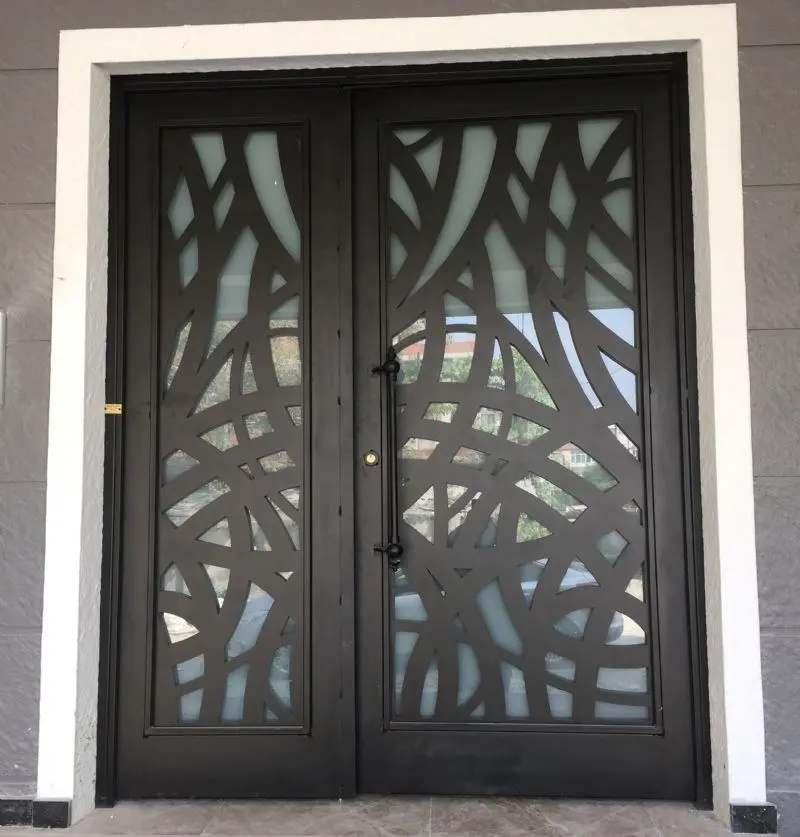
Carrying the same line to railings, entrance doors and other metalwork gives unity.
İzmir and the coastal climate: which system where?
İzmir means hot, dry summers, mild, wet winters, high humidity and salt on the coast:
- Coastal areas (for example Karşıyaka, Bayraklı, Narlıdere, Güzelbahçe, Urla): PVC has the advantage of easy upkeep. If aluminium is chosen, a quality surface coating and stainless or corrosion-resistant hardware are a must.
- Inland areas (for example Buca, Bornova, Gaziemir): both systems work well; budget, design and spans decide.
- Sunny façades: to reduce summer heat, consider solar-control glass, external shutters and shading.
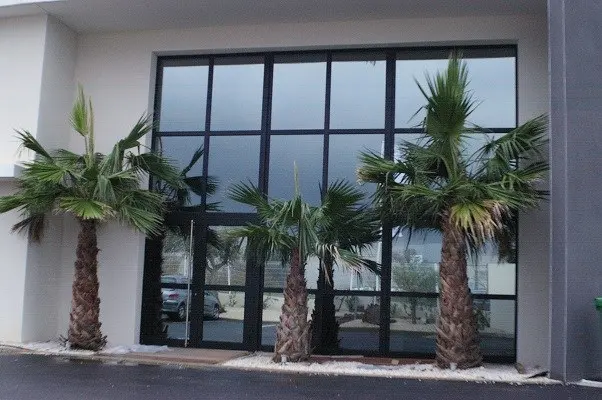
- Large glass façades and shopfronts: aluminium systems suit slim frames and wide openings better.
Which one where? A practical guide
| Situation | Suggestion |
|---|---|
| Home windows and balcony doors, budget matters | PVC is often suitable |
| Holiday home near the coast, left unattended | PVC or quality aluminium; ease of upkeep matters |
| Large spans, slim frames, modern façade | Thermally broken aluminium |
| Shopfront, office façade, entrance | Aluminium or reinforced PVC |
| Glass roof, skylight, winter garden | Aluminium |
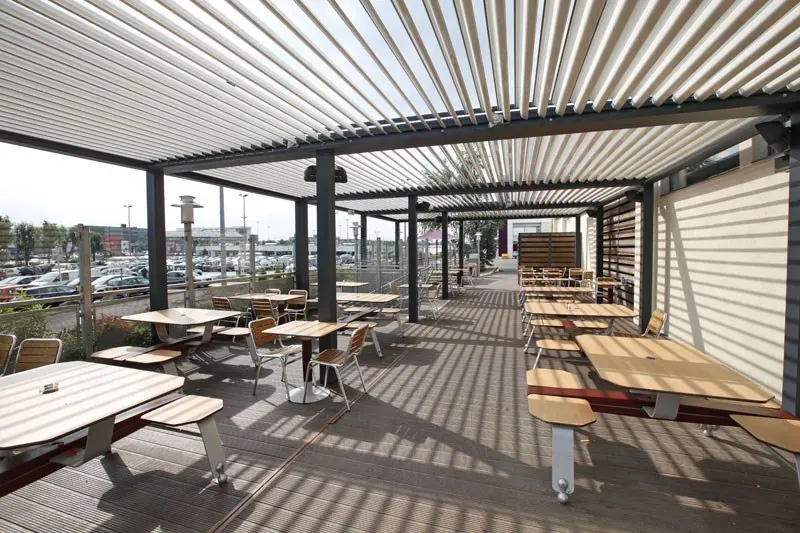
| Pergola and shade | Aluminium (or steel) |
| Sound insulation is the priority | Depends on glass and installation; both systems work |
| Dark colour, contemporary look | Aluminium or quality-coated PVC |
Choosing glass: the real performance of the window
- Double glazing: the basis of thermal and sound insulation.
- Low-e coating: reduces heat loss.
- Solar-control glass: reduces the heat entering in summer; makes a difference on south- and west-facing façades.
- Laminated glass: gives safety and sound insulation; the pieces stay in place if it breaks.
- Argon fill and spacer: improve insulation.
- Toughened glass: for safety on large panes and low sills.
Installation: as important as the product
The best window causes trouble if badly installed:
- Site measuring: wall slope, sill height and axis differences are measured on site.
- Fixing: the frame is fixed to the wall with suitable anchors, leaving room for expansion.
- Insulation and sealing: foam, tape and sealant close the wall-to-frame gap inside and out.
- Levelling: for sashes and sliders to work properly, levelling is critical.
- Waterproofing and sill: reveal and sill details must be resolved so water does not enter.
- Testing: after installation, opening and closing, locks, gaskets and sealing should be checked.
Having the team that measures and makes also install reduces the risk of errors.
What determines the price?
- Size and quantity: total area and number of sashes.
- Profile system: PVC (chambers, quality) or aluminium (thermally broken, series, thickness).
- Glass: double, low-e, solar-control, laminated, acoustic.
- Opening type: fixed, casement, tilt, sliding or folding.
- Colour and coating: white, RAL, wood-effect, two-tone.
- Hardware: quality of hinges, locks and handles.
- Extras: insect screens, shutters, box.
- Installation conditions: floor level, access, removal and making good.
A “per square metre” or “per window” price found online does not apply directly to your project. Separate lines in the quote make comparison easier.
Common mistakes
- Looking only at the profile: the glass and installation affect insulation as much as the frame.
- Choosing aluminium without a thermal break: the wrong choice where insulation is wanted.
- Not asking about the glass: the same window gives twice the difference in comfort with different glass.
- Using the cheapest quote as the only criterion: profile thickness, hardware and installation savings are often hidden.
- Choosing a dark colour without thinking about heat: expansion and heating problems can occur.
- Wrong surface and hardware on the coast: corrosion and blistering paint in a short time.
- Not measuring on site: wall differences can force remanufacture.
8 questions to ask when requesting a quote
- What is the profile system and series (PVC chambers and steel reinforcement / aluminium thermal break)?
- What is the glass build-up (double, low-e, solar-control, laminated)?
- What are the thermal transmittance (Uw) and the air, water and wind classes?
- What are the colour, coating and surface quality (durability on the coast)?
- What are the hardware make and locking system?
- Who measures, who installs and how is insulation done?
- Does the quote include transport, installation, removal and touch-ups?
- What warranty, maintenance advice and after-sales support are offered?
The process with Ertürk Metal
- Discussion and photos: you send your needs, façade photos and approximate dimensions.
- Site measuring: wall, sill, opening and existing frames are assessed.
- Design and quote: profile, glass, colour and opening type are settled and a written quote is prepared.
- Workshop manufacture: products are made in our workshop in Buca.
- Installation and handover: our team installs, checks and hands over on site.
Manufacturing time depends on the product and quantity; a firm time is given in writing once measurements and the model are settled.
Ertürk Metal in İzmir and across Türkiye
Since 2007 Ertürk Metal has made PVC and aluminium windows, doors, railings, staircases and metal structures in its workshop in Buca, İzmir. Across Türkiye our own team measures, delivers and installs. We also ship to France and install within roughly 200 km of Béziers. For details see our service areas page.
Send a photo of your façade and approximate dimensions through our contact page, on WhatsApp or by phone, and we will weigh the PVC and aluminium options together.
Conclusion
“Aluminium or PVC?” has no single right answer; the right answer depends on your need, your façade, your budget and the climate. For home windows PVC is often a balanced, economical choice; for large spans, slim frames and architectural looks, thermally broken aluminium stands out. Whichever you choose, settle the glass, hardware and installation quality in the written quote.
Related articles: Pergola, Canopy and Metal Shade Guide for İzmir · Metal Door Guide for İzmir · Steel Railing Guide for İzmir
Frequently asked questions
Does aluminium or PVC give better insulation?
Insulation is decided not by the frame material alone but by the profile system and the glass. PVC, with its multi-chamber structure, naturally conducts little heat. Aluminium can insulate very well with thermally broken (polyamide-strip) systems; aluminium without a thermal break performs poorly. Double glazing, low-e coating and correct installation largely determine the result.
Which is more durable?
Aluminium is strong; with slim profiles it can carry large spans and big panes, and it resists deformation and sun. PVC, with quality profile and steel reinforcement, is long-lived, but very wide spans and dark colours need attention for thermal expansion. Life also depends on profile quality, hardware and installation.
Which should I choose near the sea in İzmir?
PVC is not directly affected by salt and damp, so it is low-maintenance in that respect. For aluminium, a surface quality suited to coastal conditions (quality powder coat or anodising) and stainless hardware are important; when chosen well, aluminium also works trouble-free on the coast. In both cases, ask for the surface and hardware quality in writing.
What should I do for sound insulation?
The glass and the sealing matter more than the frame: panes of different thickness (asymmetric), laminated glass, a suitable cavity and a sound gasket. For façades facing traffic, laminated glass and good installation make the difference.
What colours are available?
Aluminium offers a wide range through RAL powder coating, anodising and wood-effect finishes. In PVC, white is usual; anthracite and wood-grain foils are also available. With dark PVC, quality and correct application matter because of heating and expansion in the sun.
Do CE marking and standards matter?
Yes. Windows and doors need the relevant European and Turkish product standards (for example TS EN 14351-1) and CE marking. You can ask for the air permeability, watertightness and wind-resistance classes (TS EN 12207, 12208, 12210) and the thermal transmittance (Uw) in the quote.
What determines the price?
Dimensions and quantity, the profile system (PVC or aluminium, thermally broken or not), the glass (double, low-e, laminated, solar-control), the opening type, colour, hardware, extras such as insect screens and shutters, and installation conditions. Two quotes for the same size can differ greatly because of differences in content.
Do you make windows outside İzmir or in France?
Yes. We manufacture in Buca, İzmir. Across Türkiye our own team measures, delivers and installs. We also ship to France and install within roughly 200 km of Béziers.