A railing is both one of the most visible and one of the most safety-critical elements of a building. Its main job is to prevent falls, but it also sets the character of a façade, terrace or staircase. In İzmir one more variable is added: sea influence, humidity and salt. A railing that looks good but has weak surface protection can start to blister and rust within a few years. In this guide we bring together what you need to know when choosing steel, stainless and glass railings, from safety dimensions to installation and price.
Short answer: Three things matter when choosing a railing in İzmir: (1) safety dimensions (height, infill spacing, strength) must suit the project and regulations, (2) material and surface protection must suit the location: galvanising plus powder coating outdoors, grade 316 stainless or a duplex system on the coast, (3) the fixing detail, measuring and installation should be done by the team that makes the railing. Price then builds up on these foundations through material, infill type and design.
Railing types: which one where?
“Railing” is not one product but a family that splits by infill type and material:
| Type | Where it is used | Key feature | What to watch |
|---|---|---|---|
| Vertical-bar steel railing | Balconies, garden boundaries, stairs | Economical, classic, least climbable | Bar spacing, paint system |
| Horizontal-bar railing | Modern façades, terraces | Linear, contemporary look | Climbing risk for children |
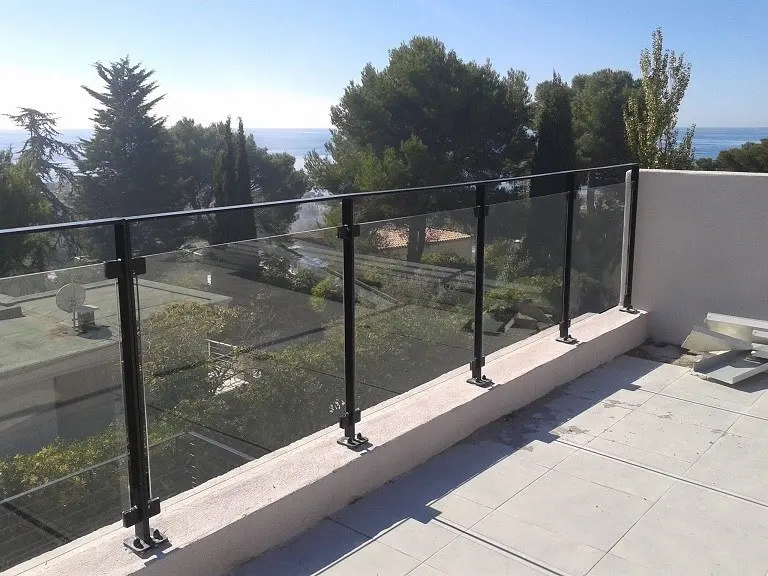
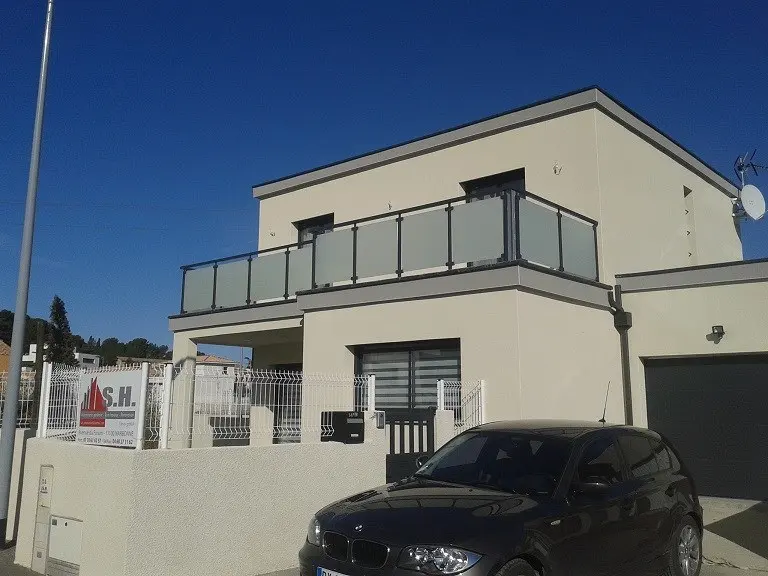
| Glass-infill railing | Sea-view terraces, interior voids, roof terraces | Does not block the view, airy look | Laminated toughened glass, fixing system, cleaning |
| Stainless steel railing | Stairs, interiors, near-coast areas | Bright surface, low maintenance | 304 / 316 choice, workmanship and cost |
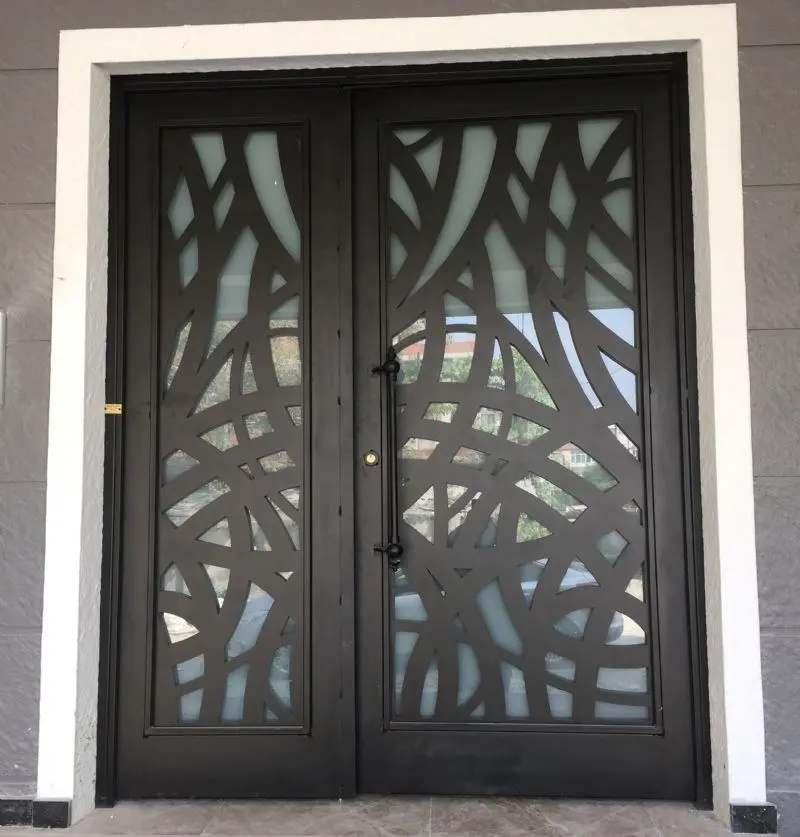
| Wrought-iron (decorative) railing | Classic façades, stairs, garden fences | Rich motifs, character | Painting and cleaning of detailed surfaces |
| Aluminium railing | Light structures, humid environments | Light, does not rust | Span and load limits |
You can see the product group on the railings and staircases pages, and real installations in the gallery.
Safety: height, gaps and strength
Because a railing’s real job is safety, its dimensions are the product of calculation, not decoration. Points to watch:
- Height: For home balconies and terraces, about 100 cm and above is common practice; taller values may be required in multi-storey or tall buildings and public areas. On stairs, the dimension is usually set from the stair slope and the handrail height.
- Infill spacing: For child safety, an opening of no more than about 10–11 cm between bars is a common criterion. The gap between the bottom edge and the floor should also be limited.
- Climbing risk: Horizontal bars and intermediate steps can become footholds for children. In homes with children, vertical infill or glass is safer.
- Strength: The horizontal loads on a railing (leaning, crowds, pushing) vary with use and are defined in Europe and Türkiye by load standards such as EN 1991-1-1. These values must be verified structurally according to the building’s use category.
- Connection: However strong the bars, a railing poorly fixed to the concrete is the weak link in the system.
Important: The values above are general practice. The exact height and spacing depend on the building type, the architectural project and the regulations in force. They should be confirmed with the project documents or the local authority before production, and the manufacturer should be asked which dimensions they work to.
Choosing the material: steel, galvanised, stainless, aluminium
| Material | Strength | Weakness | Comment for İzmir |
|---|---|---|---|
| Painted steel | Economical, takes any form, strong | Rust starts if the paint is damaged | Good in sheltered areas; a good primer is essential outdoors |
| Galvanised steel + powder coating | Steel strength + zinc protection | Costs more than painted steel | A strong choice for outdoor and near-coast sites |
| Stainless steel 304 | Good resistance to rust | Can stain in salty air | Interiors and sites away from the coast |
| Stainless steel 316 | More resistant to chloride (salt) | Expensive | Open areas with sea influence |
| Aluminium | Light, does not rust | Load and span limits | An option for light-infill balconies and terraces |
| Glass (laminated toughened) | Lets light through, keeps the view | Fixing detail is critical, needs wiping | Sea-view terraces, interior voids |
Practical summary: “galvanising + electrostatic powder coating” or 316 stainless for outdoors and the coast; for interiors and stairs, stainless handrails with glass or steel infill stand out. If the budget is tight, painted steel can be used, but you should not compromise on primer and paint quality.
How does İzmir’s climate affect a railing?
İzmir is defined by hot, dry summers, mild, rainy winters, high humidity all year and, on the coast, winds that carry salt. A railing is an element permanently exposed outdoors:
- Coastal strip (for example Karşıyaka, Bayraklı, Narlıdere, Güzelbahçe, Urla): Salt build-up speeds up corrosion; surface protection matters even more.
- Inland districts (for example Buca, Bornova, Gaziemir): Less salt, but humidity and rain remain.
- Sun (UV): Dark paints fade and turn matt over time.
- Water collection: If water stays at the railing foot, base plate or bar ends, rust starts there.
The closer you get to the sea, the more you should strengthen the system. This is the simplest rule.
Surface protection: the step that really sets a railing’s lifespan
Two railings made from the same steel can have very different lifespans depending on surface preparation. A quality system includes:
- Surface cleaning: Removing oil, rust and weld residue.
- Protective layer: Hot-dip galvanising or a suitable epoxy primer.
- Top coat: Electrostatic powder coating or industrial paint, applied at a specified thickness.
- Detail work: Coating all surfaces evenly, including weld seams, corners, bar ends and base plates; a drainage solution so that water does not stay inside profiles.
When you ask for a quote, ask: “Which primer and which paint do you apply, and how many coats?” A company that does not give a clear answer may be overlooking the most critical part of the job.
Glass railings: what to watch
A glass railing is chosen on terraces, roof floors and interior voids because it does not block the view. To be safe:
- Laminated, toughened glass must be used. A laminated structure keeps the pieces in place even if the glass breaks.
- The fixing system is chosen according to the span: clamp (point) fixing, in-profile or anchored systems. Glass thickness is calculated for this system and the load.
- Drainage: Water must not collect at the bottom edge of the glass; standing water causes rust at the fixings and stress at the glass edge.
- Between glass and metal: There should be no direct contact; a gasket or spacer should be used. Hard contact stresses the glass edge.
- Cleaning: Glass surfaces hold salt and dust; on the coast they need regular washing.
If you are using glass, request the documents and product specifications (glass type, thickness, fixing) in writing.
Installing balcony and terrace railings
The part of a railing that causes the most problems is where it connects to the structure. Fixing options:
- Top (base plate) fixing: The railing foot is fixed to the floor with a plate. It is quick, but waterproofing and floor finish must be planned.
- Side (edge) fixing: Fixed to the side face of the concrete; no floor area is lost and the waterproofing is not pierced, but the concrete edge must be thick enough.
- Embedded fixing: Railing feet are set into a recess left in the concrete in advance; it gives a strong connection but needs planning.
The order of work matters too: tiling, screed and waterproofing should be planned together with the railing detail. The waterproofing at the fixing point and the rust protection around it should be resolved at this stage. The anchor type (chemical anchor, plug, etc.) is chosen according to the condition of the concrete, so the survey and measuring must be done on site.
Stair railings and handrails
A stair railing prevents falls and also gives something to hold in daily use. Points to watch:
- Handrail: Easy to grip (about 4–5 cm in diameter), continuous and smooth; it should run without a break along the whole flight.
- Both sides: Wide stairs or heavy use may need handrails on both sides.
- Stairwell opening: Gaps between treads and in the stairwell should be limited for children.
- Curved and turning stairs: Need bending and welding work; measure on site.
- Material harmony: Using a stainless handrail with a steel or glass infill gives visual unity.
What determines the price?
Railings are generally quoted per linear metre, but many factors change the price for the same length:
- Material: Painted steel, galvanised, 304 or 316 stainless, aluminium, glass.
- Infill type: Vertical bar, horizontal bar, glass or decorative (wrought-iron) panel.
- Surface protection system: Paint only, or galvanising plus paint?
- Design and workmanship: Curved, turning or detailed work needs more labour.
- Fixing point and height: On upper floors and hard-to-reach places, installation costs more.
- Total length and number of parts: On large projects the unit cost can fall.
A single “per-metre price” is therefore misleading. For a detailed breakdown and how to compare quotes, see Railing Prices in İzmir.
Common mistakes
- Looking only at price: A cheap quote may cut corners on surface preparation and paint system.
- Taking measurements from a photo: Wall slopes and floor level differences cannot be calculated without seeing them on site.
- Skipping the fixing detail: A railing’s real strength lies in its connection to the structure.
- Choosing horizontal bars for a home with children: It creates a climbing risk.
- Using ordinary paint on the coast: Blistering and rust can appear quickly.
- Not asking for documents when choosing glass: Glass type, thickness and fixing system should be settled before deciding.
- Forgetting maintenance: Washing once or twice a year and touching up scratches extends life noticeably.
8 questions to ask when getting a quote
- To which height and infill spacing is the railing made?
- Are materials and thicknesses stated in writing?
- Are surface preparation, primer/galvanising and paint system (number of coats) clear?
- If glass is used, are the glass type, thickness and fixing system stated?
- Are the installation method (top, side, embedded) and anchor type known?
- Has compatibility with waterproofing and floor finishes been considered?
- Who measures and who installs?
- Will maintenance advice and touch-up paint be provided?
Process: how we go from measuring to installation
- Discussion and photos: You send your needs, approximate dimensions and photos.
- Measuring on site: The wall condition, fixing points and heights are measured on site.
- Design and quote: Model, material, colour and surface system are settled.
- Workshop production: Parts are made in our İzmir Buca workshop and surface protection is applied.
- Installation and handover: Our team installs the product on site and hands it over.
Production time varies with the complexity of the product, the material and the supply of paint and glass. A firm time is therefore shared once measurements and model are settled.
Consistency across railings and other products
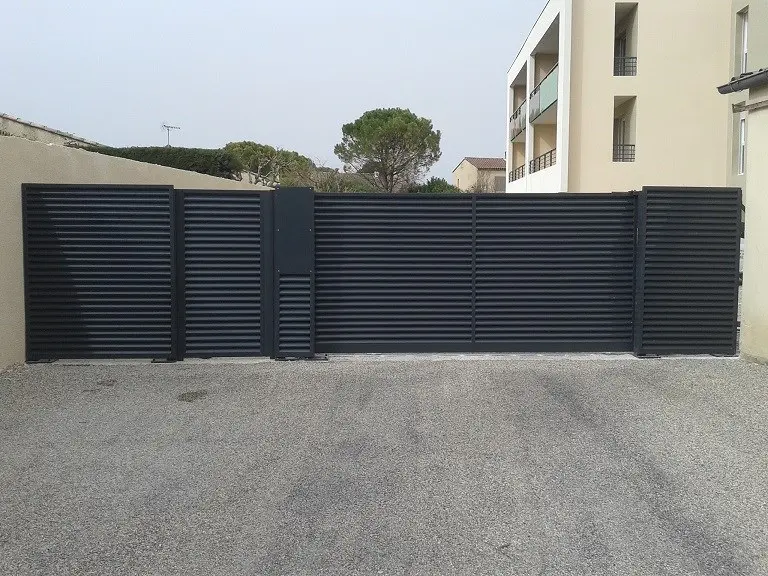
Thinking about the railing together with the building’s other metal elements gives visual unity. A garden gate, fence and railing in the same colour and line keep the façade from looking “added on”. For door choices, see the Metal Doors in İzmir guide.
Support from Ertürk Metal
Since 2007 Ertürk Metal has made railings, staircases, doors and metal structures in its workshop in İzmir Buca, and measuring, fabrication and installation are handled by one team. Products are installed by our own team across Türkiye and, in France, within about 200 km of Béziers. Send a photo of your project and approximate dimensions through our contact page or on WhatsApp (+90 555 025 53 35), and let us settle suitable material and model options together.
Related articles: 7 Things to Check When Choosing Balcony and Stair Railings · Railing Prices in İzmir · Metal Doors in İzmir guide
Frequently asked questions
How high should a balcony or terrace railing be?
For homes, about 100 cm and above is common practice; taller values may be required in high-rise, multi-storey or public buildings. The exact figure depends on the building type, the architectural project and the regulations in force, so it should be confirmed with the project documents or the local authority before production.
What gap between railing bars is acceptable?
For child safety, an opening of no more than about 10–11 cm between infill elements is a common criterion. The gap between the bottom edge and the floor should be limited in the same way. Horizontal-bar designs can be climbed, so vertical infill is safer in homes with children.
Is a glass railing safe, and which glass is used?
A glass railing installed with the right system is safe. Laminated, toughened glass is preferred so that the pieces stay in place even if it breaks. Glass thickness is calculated from the span, the fixing system (clamps, in-profile, anchored) and the load, so no single thickness is valid for every project.
Which railing material should I choose near the coast in İzmir?
Galvanised steel under electrostatic powder coating (a duplex system), grade 316 stainless steel or aluminium are safe options in salty, humid air. If painted steel is used, ask in writing which primer and paint system will be applied.
What is the difference between 304 and 316 stainless steel?
Thanks to its molybdenum content, grade 316 resists chloride (salt) better than 304. In sheltered interiors 304 is often enough; in open areas with sea influence 316 is generally preferred.
What determines the price of a railing?
Railings are mostly quoted per linear metre, but for the same length the price changes with the material, infill type, use of glass, surface protection system, design detail, fixing point and the difficulty of the job. A photo or on-site measurement is needed for the right price; a single per-metre price would be misleading.
Who should measure for a railing?
Wall slopes, floor level differences and fixing points cannot be fully understood from a photo, so we recommend that the manufacturer measures on site. This reduces the risk of parts not fitting and of rework at installation.
Do you ship railings made in İzmir to France?
Yes. Products are made in our İzmir workshop and shipped to France. Within about 200 km of Béziers we can install them ourselves; customers can also install themselves. Average lead time is 1 month; we provide CE marking, warranty and after-sales support.